Put a slice of ciabatta and a square of focaccia side by side and they look like they came from different kitchens, maybe different countries. The ingredient list is nearly identical: flour, water, salt, yeast, and for one of them, a generous pour of olive oil. What separates them is a set of decisions — how much water goes in, how the dough is handled, what it is baked in — and each decision leaves a mark on the crumb. Once you can see those marks, both breads stop being recipes you follow and become recipes you can steer.
What Hydration Actually Measures
Hydration is baker's math: the weight of the water divided by the weight of the flour, expressed as a percentage. One kilogram of flour with 750 grams of water is 75% hydration. That figure tells you how slack the dough will feel and how much strength you will need to build to hold it.
It does not, on its own, create an open crumb. A very wet dough that is mixed briefly and baked young will spread into a flat, pale slab with a dense band at the bottom. Water makes gluten more extensible — easier to stretch — but extensibility without elasticity is simply weakness. The holes in a good ciabatta come from gas trapped inside a structure strong enough to hold it, and that structure is built by mixing, folding and time.
Flour matters here too. A stone-ground flour with plenty of bran absorbs more water than a fine white one, so 75% can feel stiff from one bag and soupy from another. Treat any hydration figure in a recipe as a starting point, not a specification.
Ciabatta: Water, Strength and a Very Hot Oven
Ciabatta sits at the wet end of the Italian bread family, usually somewhere between 75% and 85% hydration, often leavened with a biga mixed the day before. The dough is worked until it stretches a long way without tearing, then kept moving during bulk fermentation with a series of folds — in the bowl, on a wet bench, or by lifting and slapping. Each fold replaces some of the strength that all that water has diluted.
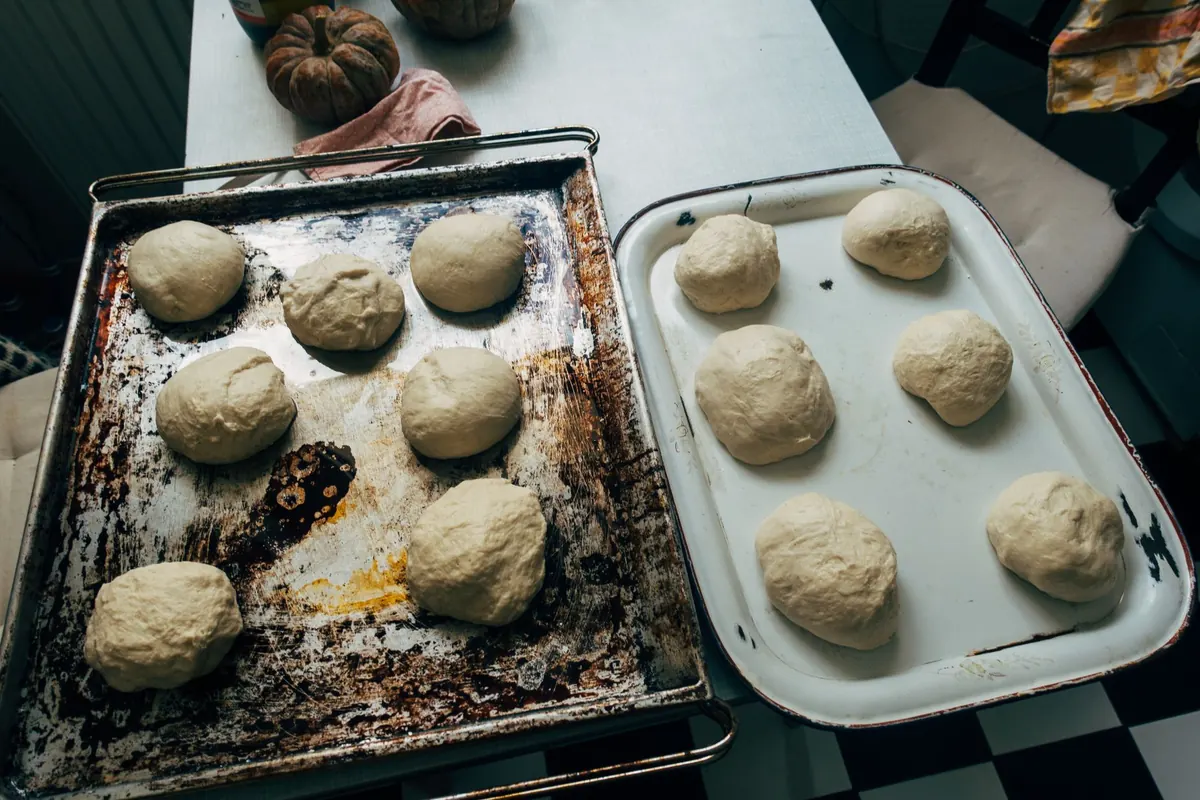
From there, everything is about avoiding rough handling. Do not punch the dough down. Tip it onto a well-floured bench and divide it with a bench scraper rather than a knife, cutting cleanly instead of sawing. Stretch each piece into a slipper rather than rolling it, and move it onto parchment so you never have to pick it up again. Let it proof seam-side down on a couche or a floured cloth.
The bake is hot: a preheated stone or steel at 240–250°C, with steam for the first ten minutes. Steam keeps the crust soft long enough for the loaves to expand, then it is vented away so the crust can set thin and crisp. The result is a loaf that is mostly holes, with a glossy, fragile shell that crackles as it cools.
Focaccia: Oil Does the Work
Focaccia usually starts a little drier, around 65% to 75%, and it carries fat. Olive oil in the dough — a couple of tablespoons per 500 grams of flour, more if you like — coats the strands of gluten and makes the crumb tender rather than chewy. That is why focaccia's interior stays soft and finely aerated instead of wildly open, even when the hydration is high.
The pan is the other half of the story. The dough proofs directly in a generously oiled tin, spreading outward as it relaxes, and the oil slips up around the edges and under the base. Dimpling is not decoration: oiled fingers pressed all the way to the bottom push gas towards the sides and leave pools of oil that fry the surface as it bakes. If your focaccia comes out flat with no dimples left, the dough was probably under-proofed or the tin was too small.
Bake it at 220–240°C, low in the oven, until the top is golden and the base sounds hollow when you tap it. Add delicate toppings — herbs, thin slices of onion, a little flaky salt — in the last ten minutes so they don't scorch, or scatter them over the focaccia the moment it comes out.
Side by Side: Where the Texture Comes From
- Hydration: ciabatta runs wetter; focaccia can be moderate because the oil does part of the tenderizing.
- Shaping: ciabatta is stretched and barely deflated; focaccia is pressed flat into a pan, which knocks back the largest bubbles.
- Fat: none in a classic ciabatta; plenty in focaccia, both in the dough and in the tin.
- Oven: ciabatta wants high heat, steam and a stone for lift; focaccia wants a hot oven floor and an oiled pan for a fried base.
- Crust: thin and crisp on ciabatta; soft and oily on top, crisp underneath on focaccia.
- Crumb: irregular, glossy holes and a chewy bite, against a fine, soft, even crumb with a few larger bubbles under the dimples.
Adjusting for Your Kitchen and Your Flour
Recipes assume a certain flour and a certain room, and neither travels well. When you open a new bag, mix the dough and then judge it by feel: it should stretch a long way before it tears, hold a shape for a minute or two, and feel tacky rather than wet. If it puddles the moment you stop folding, add flour a spoonful at a time or give it another set of folds. If it fights back and tears, add water by the teaspoon.
Weather counts too. On a humid day dough proofs faster and feels wetter; in a cold kitchen everything slows down, and a ciabatta that looks ready in three hours in summer may need five in winter. Judge by the dough — a jiggle when you shake the bowl, bubbles visible on the surface, a dome that has stopped rising — rather than by the clock.
One Dough, Two Breads
Here is a low-risk way to see the difference for yourself. Mix a 75% hydration dough with 500 grams of strong white flour, 375 grams of water, 10 grams of salt and a small pinch of yeast. Build strength with three or four folds over the first two hours, then split it in two.
Oil a small tin well and press half the dough into it. Dimple it, top with salt and rosemary, and bake at 230°C once it is puffy and full of gas. Take the other half, stretch it gently into a slipper on floured parchment, proof it a little longer, and bake it with steam on a hot stone.
Same dough, two very different breads — and you will have tasted exactly what shaping and the oven do to a crumb. After that, the numbers in any recipe become something you can read rather than obey.
Photo: lukasbieri / Pixabay