Two folded, stuffed, baked doughs come out of the same bowl of pizza dough, and yet they behave nothing alike on the way to the plate. If you have ever had a calzone split at the seam and bleed ricotta onto a hot stone, or sliced a stromboli only to find a raw spiral of dough at its centre, you already know the difference matters. What follows is a working comparison: what goes inside, how each one is closed, and what the oven does to it.
Two Different Shapes, Two Different Logic
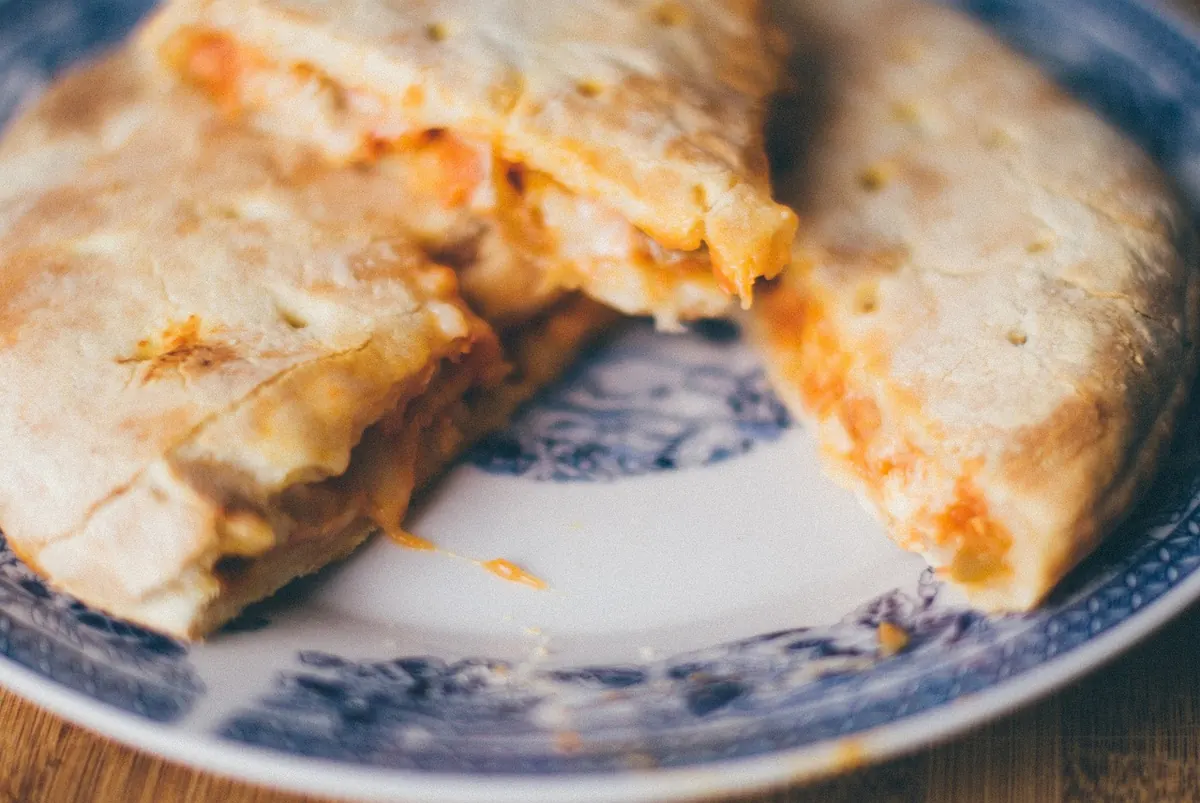
A calzone is a pocket. You roll a round of dough, mound the filling on one half, fold the other half over and crimp. The result is a single sealed cavity. In Naples it is an individual portion, baked hard and fast in a very hot oven, often with a spoonful of tomato sauce inside and the rest passed at the table. Because everything sits in one chamber, the cheese melts into a single mass and the top crust puffs away from the filling like a pillow.
Stromboli is a spiral. The dough is rolled into a rectangle, layered more or less evenly with cheese, cured meat and a restrained amount of sauce, then rolled up like a jelly roll and baked as a log. Sliced, it gives rounds with a coil of filling running through them. The style belongs to Italian-American baking rather than to Naples, and it behaves like a loaf of bread: slower bake, thicker crumb, more structure.
That is the whole comparison in one line. One is a sealed pocket with a single cavity; the other is a spiral of layers. Filling quantities, sealing technique, oven temperature and even how you serve it all follow from those two shapes.
Fillings: Water Is the Enemy in Both
Neither style forgives a wet filling, but they fail differently. A calzone leaks at the seam and burns on the stone. A stromboli turns gummy inside because the moisture has nowhere to go, trapped between the spirals.
- Drain the ricotta. Tip it into a fine sieve over a bowl for at least 30 minutes, longer in the fridge if you have time. What collects underneath is exactly what would have made your crust soggy.
- Use low-moisture mozzarella. If fresh is all you have, tear it, salt it lightly and leave it on paper towels for 20 minutes before it goes anywhere near the dough.
- Cook vegetables first. Squeeze blanched spinach in a clean tea towel until it stops dripping, dry-sauté mushrooms until they squeak, roast eggplant rather than frying it.
- Keep the sauce thick and sparse. A single calzone takes two to three tablespoons; a large stromboli no more than a third of a cup, spread thin and kept clear of the edges.
- Slice cured meats thinly. Thick coins of salami or soppressata puncture the dough from inside as it expands.
- Cool everything to room temperature. Warm filling steams the dough from within and softens the seal.
As a rough guide, a 250 g dough ball takes about 200 g of filling for a calzone, which is less than most people expect. For a stromboli, build layers no more than about a centimetre and a half thick in total. Cheese-heavy mixtures of ricotta, mozzarella and a little pecorino suit the pocket shape; stromboli rewards defined layers, with cheese on the bottom, then meat, then a smear of sauce, so the spiral reads clearly when sliced.
Shaping and Sealing
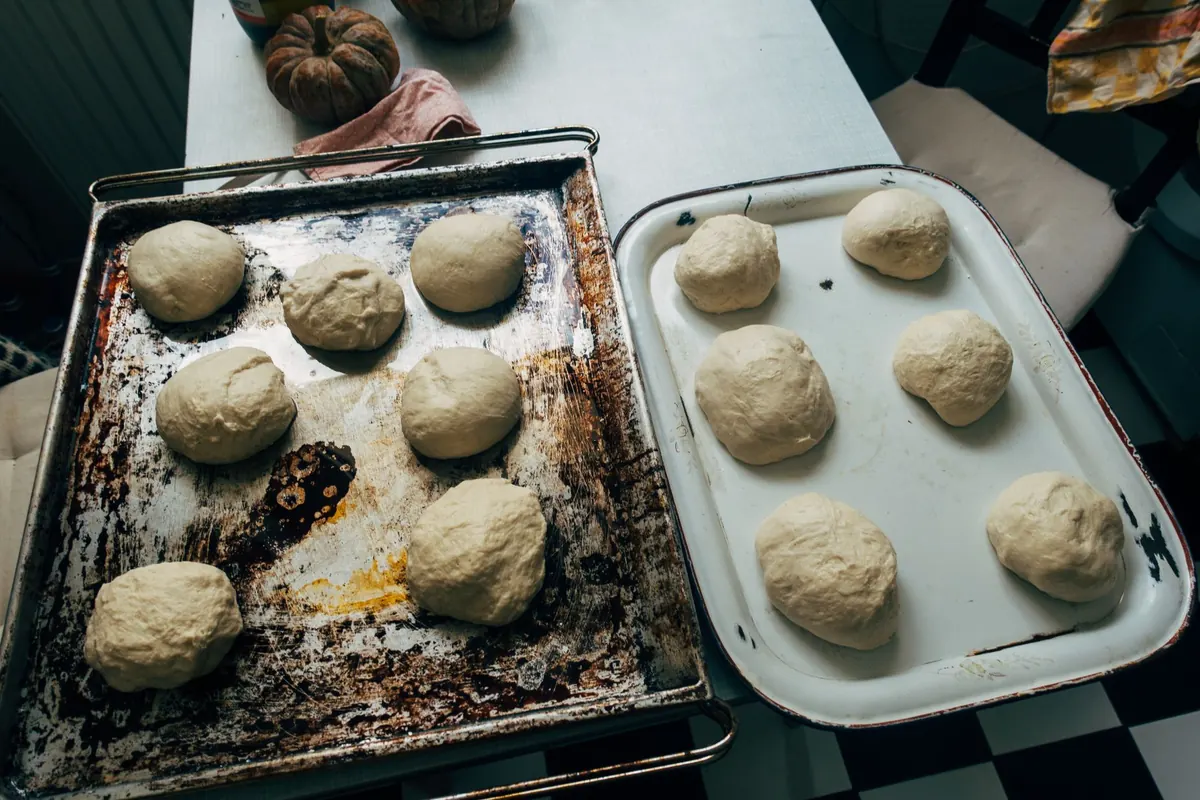
For a calzone, roll a 250 g ball into a circle about 30 cm across. Work on a floured peel or a sheet of parchment, because moving a filled calzone is not a job for bare hands. Spread the filling over the lower half only, leaving a 2.5 cm border clean. Fold the top half over, press gently to push out trapped air, then seal: press the edges together, crimp with your fingertips or a fork, and roll the sealed edge back on itself for a second barrier. Cut two or three short slits in the top so steam has an exit that is not your seam.
Rolling a Stromboli
- Stretch the dough into a rectangle roughly 30 by 25 cm on parchment.
- Leave a 3 cm border on all sides, and keep the far long edge especially clean.
- Layer cheese, meat and sauce, then roll from the nearest long side, keeping it tight but not stretched.
- Finish with the seam underneath, tuck the ends under and press them closed.
- Vent the top with a few slits, then chill the log for 15 to 20 minutes before baking so it holds its shape.
Egg wash gives stromboli its shine and helps sesame or fennel seeds cling. A calzone is better brushed with olive oil, which keeps the crust tender and blisters attractively in high heat.
Baking: Heat, Time and Results
A calzone wants a hot oven and a preheated surface. Put a baking steel or stone on a middle shelf and heat at 260 °C (500 °F) for at least 45 minutes, then bake for 8 to 12 minutes, until deeply golden and firm to the touch. The thin crust and quick bake are the point: the filling heats through while the outside blisters. Let it sit for 5 minutes before cutting.
Stromboli prefers a more moderate 200 °C (400 °F) and a longer 25 to 35 minutes on a lined tray. The dough needs time to cook through the spiral. If the top darkens before the centre is set, tent it loosely with foil. Rest the log for 10 to 15 minutes before slicing, otherwise the cheese simply runs out. Cut on a slight diagonal, in rounds about 3 cm thick.
Common Failures and Quick Fixes
Most problems trace back to one of three things: too much filling, too much moisture, or a seal that was never going to hold.
- Seam opened in the oven: the border was dirty with filling or oil. Brush the rim with water, re-crimp, and use less filling next time.
- Soggy bottom: the surface was not hot enough, or the filling was still warm. Preheat longer and cool the filling first.
- Raw centre in a stromboli: rolled too tightly with too much filling. Roll more loosely, keep layers thin, and bake a little longer at a slightly lower temperature.
- Dough tore during folding: the gluten fought back. Let the shaped round rest for 10 minutes before filling it.
Which One Should You Make Tonight?
Choose the calzone when you want a proper individual portion and a fast, fierce bake, and when your filling is soft — ricotta, mozzarella, a little ham or wilted greens. Choose the stromboli when you are feeding several people from one tray, when you want slices that travel well to a table or a lunchbox, and when your filling is layered enough to look good in cross-section. Both freeze well after baking, though the stromboli reheats more gracefully in a moderate oven.
If you are new to folded pizza, start with the calzone: it teaches sealing and moisture control with a shorter bake and less to lose. Once your seams hold and your filling no longer weeps, roll a stromboli. Same dough, different discipline.
Photo: StockSnap / Pixabay