A torta salata is what an Italian household makes when there is no plan. A round of pastry, a layer of ricotta, whatever the market or the garden gave up that week, and forty minutes in the oven. It is not a quiche, although it looks like one from a distance. The pastry is usually olive-oil based and short rather than flaky, the filling is led by vegetables instead of custard, and it is served warm or at room temperature, cut into wedges the way you would serve a cake. That last detail matters more than it sounds: a torta salata is food for a table that fills up slowly, for a lunch that stretches into the afternoon, for a slice eaten standing up in the kitchen.
Start with a pastry you will actually make twice
Most recipes assume you will buy pastry, and on a Tuesday night you should. But the Italian home version, pasta matta — literally "crazy dough" — takes four minutes and no technique. Combine 250 g plain flour with a good pinch of salt, then add 125 ml of water and 50 ml of olive oil. Mix with a fork until it comes together, knead it just enough to smooth out, wrap it and leave it for half an hour. It rolls thin, bakes crisp at the edges, and behaves best when you roll it between two sheets of parchment because it is slightly fragile.
If you want something richer and more crumbly, make a brisée: 250 g flour, 125 g cold butter cut into cubes, one egg yolk, a pinch of salt and two or three tablespoons of iced water. Rub the butter into the flour until it looks like coarse sand, add the yolk and water, gather it into a disc without working it, and chill it for at least an hour. Butter pastry needs the cold; olive-oil pastry does not, which is one reason it wins on a hot afternoon.
Use a 24 cm tin with a removable base, or a rectangular tray if you prefer to cut squares. Line it, prick the base all over with a fork, and keep a little pastry back for a rough lattice or a folded-over rim. You do not need to blind-bake unless your filling is genuinely wet — a tomato-only torta, for instance — in which case give the shell ten minutes at 190°C with parchment and beans inside.
The ricotta layer does the quiet work
Between the pastry and the vegetables sits a layer that most people never notice and every baker should. Drain 500 g of ricotta in a sieve for an hour, or overnight in the fridge — the water that comes out of it is water that would otherwise soak into your crust. Beat it with one egg, 40 g of grated pecorino, plenty of black pepper and a scrape of nutmeg. Spread it thinly over the base, no more than a centimetre deep.
This layer is a moisture barrier first and a flavour second. It also gives the slice structure, so that a wedge holds its shape on the plate instead of collapsing into loose vegetables. Skip it and the torta still works, but it becomes a different thing: flatter, drier, more of a flatbread with toppings. If you are avoiding eggs, thick drained yogurt and extra cheese will do a passable job, though the set will be softer.
Match the vegetables to the season
You can put almost anything in a torta salata, but the texture changes family by family, and it helps to know which one you are making.
Spring
Chard, spinach, spring onions, peas, artichokes. This is the classic territory of the Ligurian torta pasqualina, where whole eggs are tucked into the greens and ricotta before baking. Cook the greens, squeeze them hard, chop roughly, and season with nutmeg and a little marjoram.
Summer
Courgettes, aubergines, peppers, tomatoes, basil. Roast or griddle the aubergines and peppers rather than layering them raw. Cherry tomatoes can go in whole if you halve them and salt them first, letting them drain for twenty minutes on a tilted board.
Autumn and winter
Leeks, squash, cavolo nero, mushrooms, potatoes. Leeks sweated slowly in butter until sweet, with a spoonful of thyme, may be the best filling of the whole year. Pumpkin wants roasting, not boiling, and a crumble of amaretti or a little mustard in the ricotta keeps it from tasting like dessert.
- Strong flavours, small quantities: olives, capers, anchovies, sun-dried tomatoes, pecorino. They season the whole tart from very little.
- Herbs by affinity: basil with tomato, thyme with mushrooms and squash, marjoram with greens, parsley almost everywhere.
- Something creamy for contrast: a few spoonfuls of mascarpone or a scatter of torn mozzarella, drained well.
- A crisp element: toasted pine nuts or breadcrumbs on top, especially if the filling is soft.
Take the water out before it goes in
Almost every failed torta salata is a wet one. Vegetables are mostly water, and in a sealed pastry case that water has nowhere to go but down. So treat the removal of moisture as a step in its own right, not an afterthought.
Salt sliced aubergines and courgettes for twenty to thirty minutes, then pat them dry and roast or griddle them. Wilt spinach and chard in a dry pan, let them cool, then wring them out in a clean tea towel until you are bored — a kilo of raw leaves will give you about 250 g of usable greens. Mushrooms should be cooked until they squeak and any liquid has evaporated. Tomatoes want salting and draining. If your filling still looks loose in the bowl, add a tablespoon of fine breadcrumbs; they will quietly absorb what the pastry cannot.
Assemble, bake, and resist cutting too soon
- Heat the oven to 190°C, or 170°C with fan.
- Roll the pastry and line the tin, leaving an overhang.
- Spread the ricotta mixture across the base in an even layer.
- Add the cooled, well-drained vegetables in a loose, uneven layer — do not press them down.
- Fold the overhanging pastry inward, or cut a few strips and lay them across in a rough lattice. Brush with beaten egg.
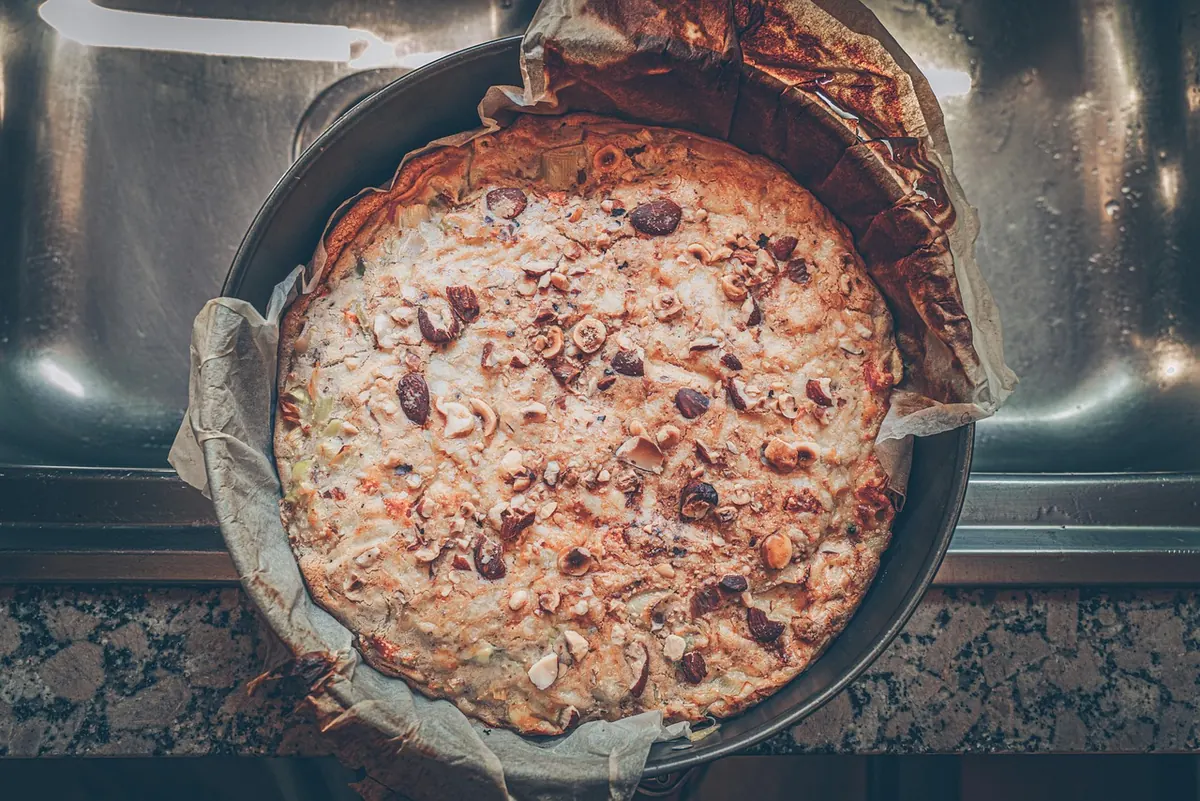
- Bake for 40 to 50 minutes, until the pastry is deep gold and pulls slightly away from the tin. A deeper dish needs closer to an hour.
- Let it rest in the tin for at least 20 minutes before releasing the ring. This is the step people skip and then regret.
If the rim browns before the middle is set, cover it loosely with foil — a ring of aluminium foil works better than a flat sheet, which traps steam. And if you are baking in a very full oven, put the tin on a preheated baking sheet so the base gets direct heat and does not go pale and soggy.
Serving, keeping, and improvising tomorrow
A torta salata is at its best an hour out of the oven, and arguably even better the next day, cold from the fridge, with a glass of something white and a few leaves dressed with lemon. Keep it covered at room temperature for the day, then refrigerate for up to two days. Reheat slices at 160°C for ten minutes to bring the pastry back; the microwave will do the opposite.
It freezes well, either unbaked or baked and sliced, wrapped individually. Bake from frozen at 180°C, adding fifteen minutes to the usual time.
The flexibility is the point. Change the cheese, change the herb, change the vegetable with the calendar, and the structure holds. Once you have made it three or four times, you will stop reading the recipe and start opening the fridge to see what needs using — which is exactly how it is made in Italy.
Photo: Antonio_Cansino / Pixabay