How to Make Classic Tiramisu Without a Double Boiler
Tiramisu looks like a restaurant dessert, but the version most of us want at home is built from a few plain things: eggs, sugar, mascarpone, strong coffee, and crisp ladyfingers. The double boiler often appears in recipes because it cooks the egg-and-sugar base into a zabaglione. You do not need that extra pan to make a lovely tiramisu. What you need is a clean bowl, a balloon whisk, coffee that has cooled completely, and enough patience to let the assembled dish rest in the fridge. The result is soft but not sloppy, rich but still light, with a bitter cocoa top that cuts through the cream.
The no-double-boiler method is especially useful when you want tiramisu without fussing over a pan of simmering water. It is also forgiving once you understand what gives the dessert its structure: air in the egg mixture, cold mascarpone, a quick dip for the ladyfingers, and a long rest. Get those four things right and you can make a classic-tasting tiramisu with nothing more exotic than a hand whisk and a mixing bowl.
Why the Double Boiler Is Optional
Traditional tiramisu often starts with zabaglione: egg yolks and sugar whisked over simmering water until pale and thickened. That step gives you a cooked, warm base, and it is a good route if you want it. But it is not the only route. In the no-double-boiler method, the eggs are whipped with sugar until they gain volume and lightness, then folded with mascarpone and stiff egg whites. The structure comes from aeration and from chilling, not from heat.
Think of the mascarpone cream as a soft mousse rather than a cooked custard. The yolks and sugar provide richness and sweetness, the mascarpone gives body and tang, and the whipped whites lighten the whole mixture so it does not sit on the tongue like butter. When the cream is layered with coffee-soaked ladyfingers and chilled, it firms up just enough to slice. It will never be as rigid as a cheesecake, and it should not be. A good tiramisu trembles slightly when you cut it.
This is not a free pass on food safety. A no-cook custard made with raw eggs should be handled with care. Use pasteurized eggs when you can find them, keep the mascarpone cold, and refrigerate the finished tiramisu promptly. If you are serving anyone pregnant, very young, older, or with a weakened immune system, use pasteurized eggs or choose a recipe where the egg base is cooked. Check the egg carton and follow local guidance; that is the sensible line to draw.
What You Need
This makes one dish of about eight generous portions. Use a 20 x 20 cm (8 x 8 inch) dish, or a similar dish that holds the ladyfingers in a snug single layer. A loose fit leaves gaps that fill with cream and makes the layers harder to cut neatly. A glass dish is helpful because you can see whether the coffee has soaked evenly through the sides.
- 4 large eggs, separated, at room temperature — pasteurized if possible. Separate them carefully; even a trace of yolk in the whites makes them harder to whip.
- 100 g (1/2 cup) granulated sugar — ordinary sugar is fine. It dissolves better if the eggs are not fridge-cold.
- 450 g (16 oz) mascarpone — cool but not hard from the fridge. If it looks watery, drain it briefly in a sieve lined with paper towel.
- 200 g (7 oz) crisp ladyfingers — also called savoiardi. Soft cake-style ladyfingers will turn to mush, so check that they snap rather than bend.
- 240 ml (1 cup) strong espresso or very strong brewed coffee, cooled completely — hot coffee will melt the cream and make the layers sloppy.
- 2 tablespoons Marsala, dark rum, or coffee liqueur, optional — stir it into the cooled coffee if you want a more traditional flavor.
- A pinch of salt — for the egg whites. It helps them whip more steadily.
- 2 to 3 tablespoons unsweetened cocoa powder — for dusting just before serving. Dutch-process cocoa gives a darker, smoother top.
How to Make the Cream Without a Double Boiler
Start by making the coffee so it has time to cool. Brew it strong, pour it into a shallow bowl, and let it come to room temperature. If you are adding liqueur, stir it in now. Cold coffee is not a detail to skip: warm coffee will soften the cream at the edges and make the finished dish weep.
Separate the eggs while they are cold, then let them sit for twenty minutes if you have time. Put the yolks in a large bowl and the whites in a very clean, dry bowl. Add the sugar to the yolks and whisk vigorously until the mixture is pale, thickened, and falls from the whisk in a soft ribbon. This can take three to five minutes by hand, longer if your eggs are cold. You are not cooking the mixture; you are beating air into it.
Add the mascarpone in three or four spoonfuls, whisking gently after each addition. Stop as soon as the mixture is smooth. Overbeating mascarpone can make it grainy or loose, especially if it was very cold. If the cream looks slightly speckled, switch to a spatula and fold a few times rather than whisking harder.
Add the pinch of salt to the egg whites and whip them to soft, glossy peaks. They should hold their shape but still droop gently at the tip. Fold one-third of the whites into the mascarpone mixture to loosen it, then fold in the rest in two additions. Use a light hand: scoop from the bottom, turn the bowl, and stop when there are no large white streaks. A few small streaks are better than a deflated cream.
Assembling and Chilling
Pour the cooled coffee into a shallow dish. Dip each ladyfinger for about one second per side. This is the step where most tiramisu goes wrong: a quick turn is enough for crisp savoiardi, while a long soak turns them into porridge. If your ladyfingers are very thin or delicate, dip one end and then the other rather than submerging the whole biscuit. Let the excess coffee drip back into the dish before you lay the biscuit in the pan.
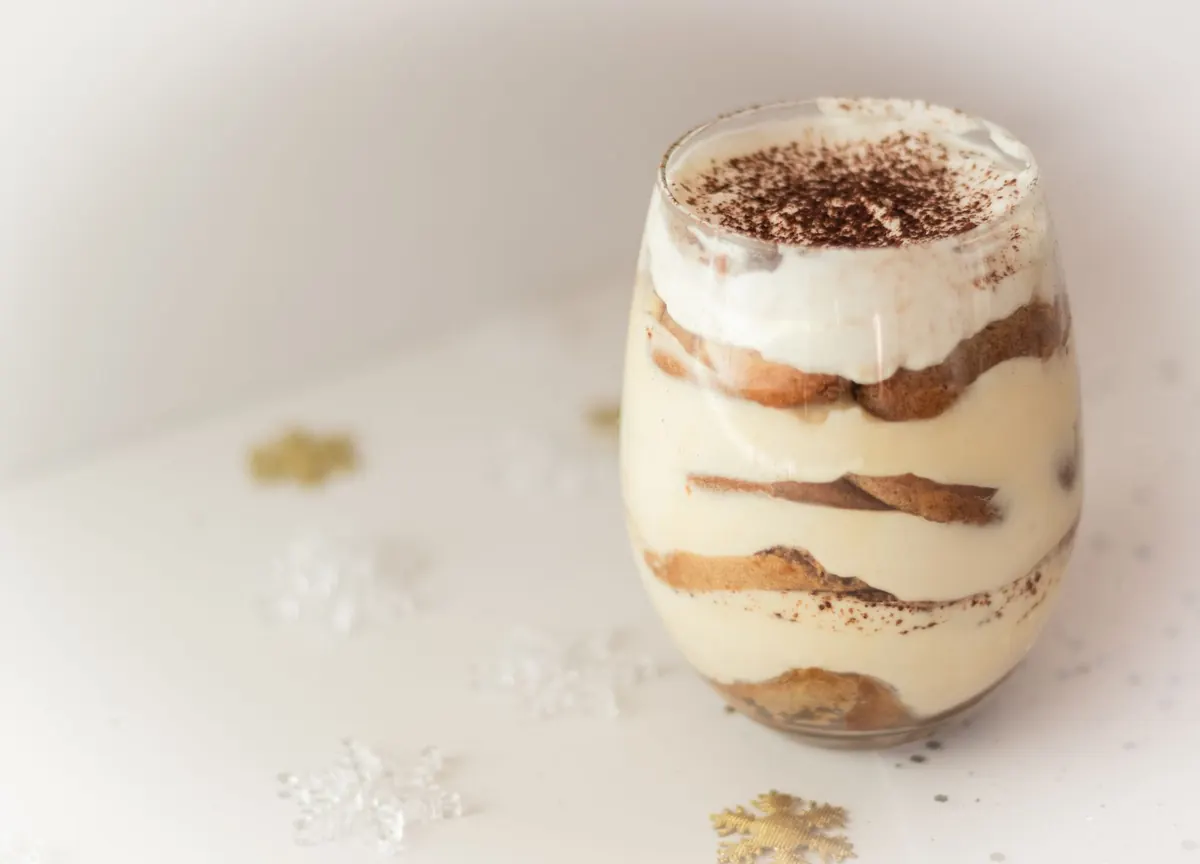
Arrange a snug single layer of dipped ladyfingers in the bottom of the dish, breaking one to fill any gap. Spread half the mascarpone cream over the top with an offset spatula or the back of a spoon. Repeat with a second layer of dipped ladyfingers, then spread the remaining cream over the top and smooth it lightly. Do not press down hard; you want to keep the air in the cream.
Cover the dish with plastic wrap or a lid and refrigerate for at least six hours, preferably overnight. This rest is not optional. It gives the coffee time to travel through the ladyfingers, the cream time to set, and the flavors time to marry. Dust the cocoa over the top only just before serving. Cocoa added too early absorbs moisture and turns dull and damp.
Quick check: If you must serve tiramisu the same day, chill it for at least four hours and accept that it will be softer at the center. Overnight is the difference between a good tiramisu and a very good one.
Troubleshooting the No-Cook Method
If the tiramisu is soupy, the likely causes are over-soaked ladyfingers, under-whipped egg whites, overmixed cream, or too little chilling time. Next time, dip faster, whip the whites to soft peaks, fold gently, and plan for an overnight rest. For the current dish, you can spoon it into glasses and call it tiramisu parfait rather than trying to rescue the shape.
If it tastes dry, the ladyfingers may have been too crisp for a one-second dip, or the coffee may not have been strong enough. Brush the top layer of biscuits with a little extra cooled coffee before adding the cream, but do so sparingly. Dry tiramisu is easier to fix than soggy tiramisu.
If the mascarpone looks grainy, it was probably too cold or overbeaten. Let it sit at room temperature for ten minutes before mixing, and beat only until smooth. A few small lumps will disappear after chilling, but a separated cream will not.
Make-Ahead, Storage, and Serving
Tiramisu is an excellent make-ahead dessert. Assemble it up to twenty-four hours before serving, cover it well, and keep it in the coldest part of the fridge. Do not dust it with cocoa until the last minute. Leftovers keep for two to three days, covered, though the ladyfingers will continue to soften. Serve it cold, straight from the fridge, with a small sieve of cocoa at the table if you want to refresh the top.
For clean slices, use a sharp knife dipped in hot water and wiped dry between cuts. Serve in modest squares: the dessert is rich, and a little goes a long way. A small glass of espresso or a spoonful of unsweetened whipped cream on the side is enough. If you are transporting the dish, chill it thoroughly first and carry it flat; a cold tiramisu travels much better than a just-assembled one.
Useful Variations
Once you have the basic method, the variations are easy. Add a teaspoon of vanilla extract to the mascarpone cream, or grate a little orange zest into the coffee for a bright, grown-up edge. A tablespoon of cocoa whisked into the mascarpone makes a chocolate tiramisu, though it will be denser. For a fruitier version, layer thinly sliced strawberries or raspberries between the ladyfingers and cream, but pat them dry first so they do not water down the dessert.
You can also change the soaking liquid. Strong coffee is classic, but espresso mixed with a little milk makes a milder version for children, and brewed decaf works perfectly for an evening dessert. Just keep the liquid cool and flavorful. The goal is not to drown the ladyfingers; it is to give them enough coffee to taste through the cream. With a clean bowl, a sturdy whisk, and an overnight rest, the double boiler stays in the cupboard and the tiramisu still arrives at the table looking and tasting like the classic.
Photo: Melanie Dompierre / Pexels